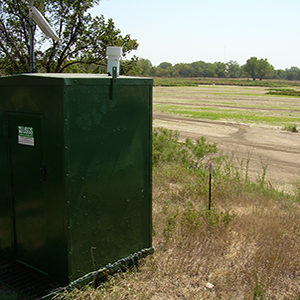
Continuous and discrete surface-water, groundwater, and water-quality data are collected to provide long-term hydrologic records critical to investigating hydrology, modeling climate-change, evaluating natural and anthropogenic changes in the hydrologic regime, and providing information on water availability to water managers.
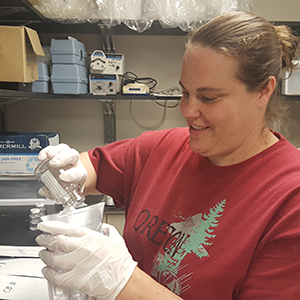
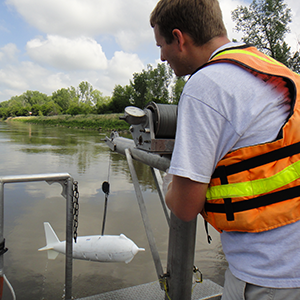
Explore Our DataInformation about water quality in streams and rivers throughout Nebraska is critical to making informed decisions about water resources. Data can be collected from rivers and streams, analyzed, then used by water managers for making decisions to improve water quality.
Our research focuses on
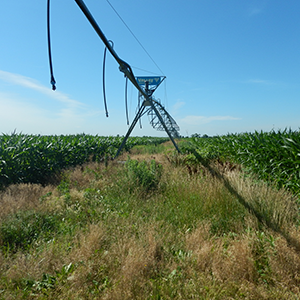
How much water is available and how water resources are used are critical questions for managers of Nebraska's water resources. USGS scientists use models to simulate how water use may affect water resources, study the interaction between groundwater and surface water, and monitor water levels throughout the state.
Our research focuses on
Groundwater/surface-water interaction near the confluence of the Elkhorn and Lower Platte Rivers
High Plains Groundwater Availability Study
High Plains Water-Level Monitoring Study
Groundwater Quality and Age of Secondary Bedrock Aquifers, Eastern Nebraska
Natural hazards, such as floods and droughts, can have long-term impacts on communities. By mapping the extent of floods and studying how water managers can best manage water resources, the USGS Nebraska Water Science Center is helping mitigate the effects of natural hazards.
Our research focuses on
USGS Nebraska Water Science Center scientists have extensive modelling expertise and experience including advanced regional and local numerical groundwater models which run on an extensive computer array; multi-dimensional and steady and unsteady flow models; flood inundation maps and flood insurance studies; empirical and theoretical run-off models; and innovative and complex numerical optimization and parameter estimation techniques. These simulations can identify risks both to water resources and infrastructure and can also develop management scenarios to minimize those risks.
Our research focuses on
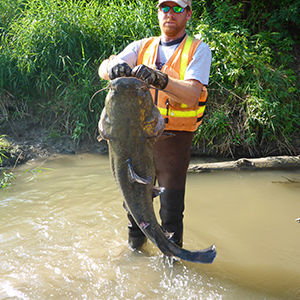
USGS scientists are researching how stream ecology responds to changing conditions such as climate, chemical stressors, and habitat changes across a variety of ecosystems in Nebraska.
Our research focuses on
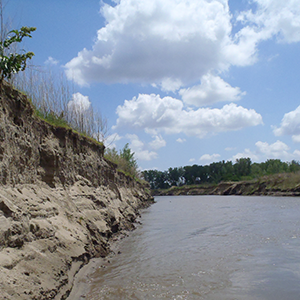
USGS scientists are researching the effectiveness of aquatic habitat restoration and the impacts of flow management/augmentation on the shape of stream channels.
Our research focuses on
Director
402.328.4110
rswanson@usgs.gov
Assistant Director
402.328.4124
jmlambre@usgs.gov
Associate Director
402.328.4151
speterson@usgs.gov